Gardening Services in Bow

Gardening Services Bow helps homeowners and landlords keep outdoor spaces orderly, healthy and ready to use through practical garden maintenance, tidy seasonal cuts and careful one-off work. The focus is on the routine tasks that keep a garden from becoming overgrown, along with heavier interventions where plants, lawns or boundaries need resetting. If you need a clean, manageable finish rather than a patchwork of rushed jobs, our service can cover the core work in a clear and straightforward way.
Our work is shaped around the condition of the space, the planting already in place and the result you want to achieve. That may mean regular upkeep, a reclaiming visit after a period of neglect, or a plan that combines mowing, trimming and clearance in one visit. We keep the service practical and flexible, with the aim of making outdoor areas easier to enjoy, easier to maintain and easier to bring back into good shape when they have been left for a while.
For a tailored quotation, start with the basics of the space and the outcome you want. If you already know which parts need attention, we can shape the work around them. Tell us what the garden needs and we’ll help you decide the most suitable service path.
Regular garden maintenance for a tidy outdoor space
Routine maintenance is often the simplest way to keep a garden under control, especially where growth is steady and the layout is already established. We can look after the main visible tasks that make a strong difference to day-to-day appearance, such as edging, trimming, mowing and general tidying. This kind of visit is useful when you want a consistent standard without having to manage separate jobs yourself.
We also take into account how the garden is used. Lawns, planting beds, boundary planting and paved edges all wear differently and benefit from different approaches. A well-planned maintenance visit avoids overcutting, keeps paths clearer and helps preserve the look of shrubs and hedges. Where access is awkward or different areas need different levels of attention, we can shape the work accordingly rather than treating every space the same.
Lawn care and mowing

Lawn mowing is one of the most visible parts of garden care, but a good result depends on more than simply cutting grass. The height of cut, the condition of the lawn and the amount of surrounding growth all affect the finish. We work to create a neat, even look that suits the grass and the wider garden, rather than chasing a one-size-fits-all result. Where needed, mowing can be combined with strimming and edge work for a sharper overall presentation.
Lawns that have been left too long need a little more care than a routine cut. In those cases, the grass may need staged reduction, extra clearing of clippings and attention to access around borders and trees. A careful approach helps reduce stress on the lawn and avoids leaving the garden looking ragged. If you are comparing options, it can help to think about whether you need a single tidy-up visit or a repeat maintenance pattern over time.
For a clearer quotation, it is useful to know the approximate lawn size, whether there are multiple grassed areas, and whether the job includes edges, clippings or path tidying. A brief note about the current height of growth can also help. Good information at the start makes it easier to suggest the right approach and the right level of work.
Hedge trimming and boundary shaping
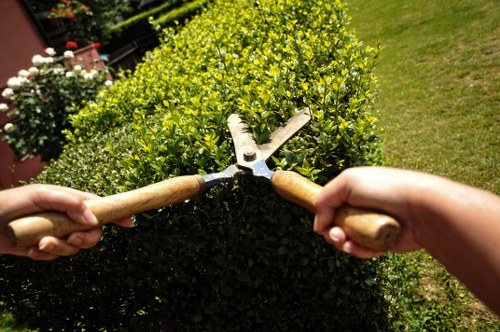
Hedge trimming can change the feel of a garden quickly, especially where boundary planting has become uneven or too wide for the available space. Our hedge work is designed to restore a cleaner outline, improve light where growth has become dense and keep edges more manageable through the seasons. The approach suits decorative hedges, boundary lines and mixed planting that needs a steady hand rather than heavy reduction.
Different hedges call for different handling. Some respond best to a light, regular trim, while others may need a more considered cut to bring the shape back gradually. We aim to leave the hedge balanced and more predictable in future growth, while also dealing with the cut material in a tidy way. This matters where hedges border paths, driveways, shared boundaries or planted areas that are easy to overshadow.
Garden clearance and resetting overgrown spaces

Garden clearance is useful when plants, weeds, cuttings or general debris have built up and the space needs to be brought back under control. This can be a practical choice before routine maintenance begins, after a period of neglect or ahead of other landscaping work. Clearing is usually about reducing clutter, opening up access and creating a more workable starting point for the next stage of the garden.
In a clearance job, the detail matters. Some spaces need only a light tidy, while others involve thicker growth, awkward access, buried edges or mixed materials that need separating out. We work methodically so the finished area is easier to assess and plan. Where there are plants worth keeping, we can avoid cutting too aggressively and concentrate on the parts that are preventing the garden from being used properly. That makes the difference between a simple tidy and a more thoughtful reset.
Useful details for this type of work include the general condition of the space, whether there are fixed items to work around, and how much of the garden you want cleared in one visit. If you have a particular end point in mind, say whether the aim is a clean blanker start or a manageable improvement. A short description can save time later and leads to a more accurate quotation.
Landscape gardening and garden improvements
Landscape gardening is a broader service for gardens that need more than routine upkeep. It can bring together several practical changes so the layout, structure and usability of the space improve together. That might include reshaping beds, refreshing planting areas, improving edges or reworking the overall balance of lawn, paving and growing space. The aim is to make the garden feel deliberate rather than piecemeal.
Because every garden has different strengths, landscape work works best when the plan matches the site. Some outdoor areas need structure and definition, while others need a softer approach that keeps existing features and simply improves the finish. We can discuss what should remain, what should be removed and what kind of result makes the most sense for the area you have. A thoughtful plan helps avoid unnecessary work and keeps the project focused on visible improvement.
Planning the right scope of work
When several tasks are involved, it helps to decide which are essential and which are optional. For example, you may want maintenance only, or you may want maintenance with a clearer boundary shape, additional clearance and a few practical layout changes. A clear scope makes it easier to compare options and avoids confusion over what should happen during the visit. It also gives you a better basis for a quotation that reflects the actual condition of the garden.
One useful way to think about the work is to separate immediate needs from longer-term improvements. Immediate needs might include grass cutting, hedge reduction or clearing access. Longer-term improvements may involve reorganising planting areas or refreshing the overall look of the space. We can support both kinds of task, but it is best to define them early so the work is proportionate to the garden itself rather than overly broad. If you want more detail, our services overview gives a helpful starting point.
Good planning also means thinking about what the garden should look like once the work is complete. Some customers want a neat, simple finish; others want a stronger transformation with clearer structure. Either approach can be sensible if it is matched to the site. Clear priorities help the job stay focused and make the quotation process easier to follow.
Decking and outdoor surfaces
Decking can be an important part of a garden layout, creating a level area for seating, access or simple visual structure. Where decking is part of the wider outdoor space, it should sit comfortably alongside planting, lawn and paved paths rather than feeling detached from them. This means thinking about both appearance and practicality, especially where edges need cleaning up or nearby growth is beginning to crowd the surface.
Our work can include helping decking feel integrated within the garden by improving the surrounding areas and keeping the lines of the space clear. That is particularly useful where the deck is being viewed as part of an overall tidy-up rather than as a separate feature. A neat perimeter, manageable planting and a sensible balance of open and planted areas can make the whole garden feel more settled and easier to maintain.
About Bow
Bow is a district in the East End of London, now part of the London Borough of Tower Hamlets, and it has long been shaped by transport routes, industry, housing and later redevelopment. The area sits close to the River Lea corridor and to the Lea Navigation, placing it within a landscape that has historically linked waterways, docks and movement across east London. Bow’s name is often associated with Bow Road, one of the main historic thoroughfares through the district, and with Bow Church, a well-known local landmark whose presence reflects the area’s long-established parish history. Nearby stands Bow Church DLR station, part of the modern transport network that now serves the district alongside Underground and bus connections. The neighbourhood also sits within reach of the wider green and open spaces of east London, including the Lea Valley and parks connected to the river system. Residential streets, estates and newer developments sit beside traces of older industrial and civic layers, giving the district a varied built environment rather than a single uniform character. Bow is also linked in wider cultural memory with the East End’s history of labour, reform and migration, themes that have shaped many parts of east London over time. Today, the area combines busy routes, neighbourhood streets and local centres, with architecture ranging from older terraces and civic buildings to more recent apartment schemes. Its position between central London, the Docklands and neighbouring parts of Tower Hamlets makes it a place with a strong urban identity and a layered history that remains visible in the streetscape.
Tree lopping and careful removal

Tree lopping and removal are more specialised parts of garden work, and they are handled with the aim of improving safety, access and the overall balance of the site. Some trees simply need reduction so they sit more comfortably in relation to fences, lawns, sheds or neighbouring planting. Others may need full removal where they are no longer suitable for the space or are causing ongoing practical problems. The right option depends on the tree, its location and what you want the garden to become afterwards.
Where work on trees is required, it is important to keep the process controlled and proportionate. That means considering what should remain, how the cut material will be handled and how the surrounding area will look once the work is complete. A well-managed tree job can open up light, reduce crowding and make the rest of the garden much easier to use. If a tree is being retained, sensible reduction is often better than unnecessary heavy cutting. Tree lopping and removal can be discussed as a separate task when the garden needs more than routine trimming.
For any quotation request, it helps to mention whether the tree is in open ground, close to structures or part of a line of mixed planting. A quick outline of the desired result is usually enough to begin. Ask for a quotation when you are ready, and we can help match the work to the condition of the garden and the level of finish you want.
Quotations, access and practical preparation
Pricing for gardening work is usually shaped by the size of the area, the type of work involved and the time needed to complete it properly. A mowing-only visit is not the same as a clearance job, and hedge trimming may need different equipment and more care than basic tidying. If several services are combined, the scope becomes the main driver of cost, so it helps to be specific about what you want included rather than simply asking for a general tidy-up.
A useful enquiry usually includes the condition of the garden, any access points, and whether there are items that need to remain undisturbed. If possible, mention if the space is straightforward to reach, whether there are narrow passages, and whether the work involves front, rear or side areas. You do not need to prepare a long brief, but a clear outline helps us advise on the most suitable approach. If you want to compare practical information before deciding, pricing and quotes is a sensible place to look.
When you are ready, the simplest next step is to send a concise description of the work you want done and ask for a quotation. If you prefer, you can also use the contact page to start the conversation. Request a quotation here.